
Traveling with children can feel overwhelming—balancing routines, supporting growth, and keeping everyone engaged while constantly on the move. If you’re searching for practical guidance on parenting while traveling, this article is designed to help you create stability, encourage learning, and make the journey meaningful for the whole family. From travel-friendly routines to adaptable learning strategies, we’ll explore how to support your child’s emotional and cognitive needs no matter where you are in the world.
A key focus is the importance of play in child development, especially in unfamiliar environments. Play isn’t just entertainment—it’s how children process change, build resilience, and develop critical skills. Drawing on established child development research and real-world travel experience, this guide offers practical, field-tested strategies you can implement immediately. Whether you’re planning a short trip or embracing long-term nomadic living, you’ll find actionable insights to help your family thrive on the road.
More Than Just Fun: Why Play is the Blueprint for a Thriving Child
Many adults treat play like recess from learning. Yet what if play is the learning? Today’s parents feel pressure to swap blocks for flashcards and playgrounds for prep courses. However, research shows play builds resilience and language skills. In words, the importance of play in child development isn’t sentimental—it’s neurological.
Admittedly, structured lessons have value. Still, when calendars replace imagination, creativity suffers. Looking ahead, experts speculate workplaces will reward adaptability and collaboration—skills first rehearsed in make-believe. So before adding class, ask: could unstructured play be smarter investment?
Building a Better Brain: How Play Shapes Cognitive Skills
Play isn’t just a break from learning—it is learning. When children stack blocks, solve puzzles, or invent new game rules, they’re practicing cause-and-effect, spatial reasoning, and strategy. Knocking over a wobbly tower teaches physics (in a very dramatic way). Figuring out why a puzzle piece doesn’t fit builds critical thinking. The benefit? Stronger problem-solving skills that transfer directly to math, science, and everyday decision-making.
Imaginative play unlocks abstract thinking. A cardboard box becomes a spaceship. A couch becomes a mountain. This kind of creativity strengthens visualization and innovation—skills future designers, engineers, and storytellers rely on. (Yes, today’s blanket fort could be tomorrow’s startup idea.)
Language grows just as powerfully through pretend scenarios. When kids narrate adventures or negotiate roles, they expand vocabulary, improve storytelling, and practice communication. Over time, this builds confidence in reading and writing.
Focused play also stretches attention spans. Choosing one activity and sticking with it trains the brain to concentrate longer—an advantage in structured classrooms.
Key benefits include:
- Sharper problem-solving and reasoning
- Greater creativity and innovation
- Stronger language and literacy foundations
- Improved focus and persistence
Understanding the importance of play in child development helps parents see what’s in it for their child: a stronger, more adaptable brain built through joy.
Learning to Connect: Play as the Foundation for Social and Emotional Intelligence
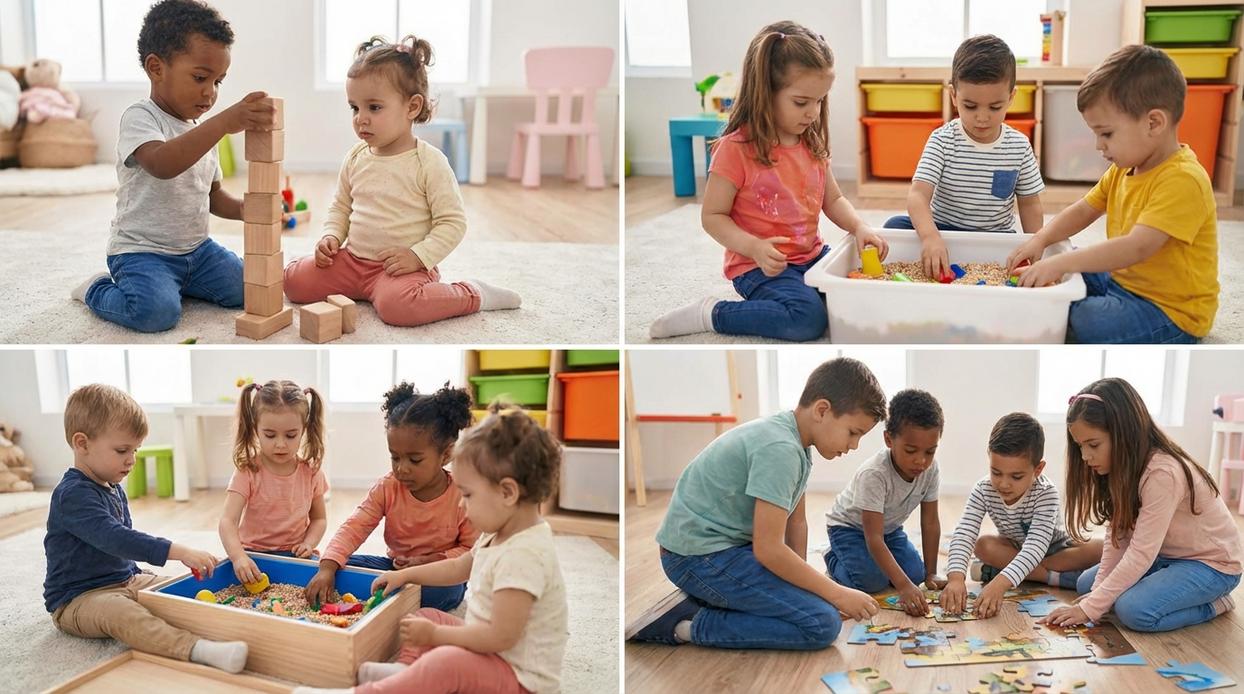
Why Play Is More Than “Just Fun”
Many adults treat play as a break from “real learning.” However, research consistently highlights the importance of play in child development as central, not optional (American Academy of Pediatrics, 2018). In fact, when children role-play “doctor” or “family,” they’re rehearsing empathy. By pretending to soothe a sick patient or act as a parent, they practice perspective-taking—stepping into someone else’s emotional world. It’s method acting for preschoolers (minus the dramatic awards speeches).
At the same time, group games quietly teach cooperation and negotiation. Board games, make-believe adventures, even deciding who gets the red crayon first—these moments require sharing, turn-taking, and compromise. Some argue kids should “toughen up” by solving conflicts alone. Yet without guided play, many simply repeat power struggles instead of learning resolution skills.
Equally important, play builds emotional regulation. A collapsing block tower sparks frustration; winning tag brings joy. Because the stakes are low, children can feel big emotions safely—and try again. Pro tip: narrating feelings during play (“That was disappointing, huh?”) strengthens emotional vocabulary (Harvard Center on the Developing Child).
Ultimately, shared laughter and imagination form friendships. Through playful rituals, children decode social cues and build trust—one silly game at a time.
From Crawling to Climbing: Mastering a Lifetime of Movement
From a baby’s first crawl to a preschooler scaling playground ladders, gross motor skills shape how children experience the world. Running, jumping, and climbing strengthen large muscle groups while improving balance, coordination, and endurance. These movements also stimulate the vestibular system (the body’s balance regulator), which supports spatial awareness. While some argue structured sports matter more than free play, research shows unstructured active play builds adaptable strength and problem-solving skills that organized drills often miss (American Academy of Pediatrics). Freedom to move in varied environments—parks, trails, even airports—creates more resilient bodies.
Fine motor skills, by contrast, rely on small, precise movements of the hands and fingers. Drawing, molding clay, or buttoning a jacket develops dexterity essential for writing and self-care tasks. Screens can teach shapes, critics say, but they can’t replicate the tactile feedback of squishing mud between fingers (and yes, the mess is part of the magic).
Sensory integration grows stronger through messy play with sand, water, or grass, helping the brain organize touch, sight, and movement inputs (CDC).
Regular active play supports healthy weight, bone density, and emotional well-being—proof of the importance of play in child development. For deeper insights, explore age by age milestones what parents should watch for.
How to Weave Play into Your Everyday Family Routine
Play as a Mindset, Not an Event
First, shift how you define play. It’s not a scheduled activity with color-coded bins and specialty toys (though those can be fun). Instead, think of play as a mindset. Cleanup becomes a race against the “tickle monster.” Folding laundry turns into a sock-matching championship. When play is woven into routines, it stops feeling like one more task on your list and starts feeling natural.
On-the-Go Playfulness
Meanwhile, errands and travel offer built-in opportunities. Try a storytelling chain where each person adds one sentence. Play “I Spy” in the airport. Create simple hand-clapping rhythms while waiting in line. These screen-free ideas require zero equipment yet build attention, language, and connection. That’s the importance of play in child development in action.
The Power of “Loose Parts”
Next, consider “loose parts.” This term refers to open-ended items—cardboard boxes, blankets, wooden spoons—that can become anything. Unlike single-purpose toys, loose parts encourage creativity and sustained engagement (a box spaceship today, a bakery tomorrow).
Child-Led Exploration
Finally, let your child lead. When they direct the activity, they practice decision-making and independence. You’re not stepping back completely—you’re stepping back strategically. Pro tip: observe first, then join only if invited.
Unlocking your child’s potential starts with a simple clarification: play is not a break from learning; it is learning. When we talk about the importance of play in child development, we mean that games, make-believe, and movement build REAL skills. Through playful problem-solving, children strengthen thinking, cooperation, and coordination. In simple terms, play connects the brain and body. Yes, worksheets have value, but unstructured fun often teaches persistence and empathy better than drills (think less classroom, more LEGO). To raise capable, happy kids, prioritize:
- curiosity
- movement
- connection
Turn off distractions and say YES to ten minutes of genuine play today.
Keep Growing Wherever You Go
You set out looking for practical ways to support your child’s growth while living life on the move. Now you have a clear roadmap—simple routines, flexible learning strategies, and travel-friendly habits that make every destination an opportunity for connection and growth.
When routines feel uncertain and schedules change, it’s easy to worry that your child might fall behind. But with intention, consistency, and a focus on the importance of play in child development, you can turn airports, parks, and small rental spaces into powerful learning environments.
Here’s the truth: children don’t need perfect conditions. They need engaged parents, meaningful experiences, and space to explore.
If you’re ready to make travel smoother, more enriching, and less stressful, start applying these strategies on your very next trip. Explore more travel-tested parenting tools and routines designed to simplify life on the road—so you can raise confident, curious kids anywhere you go.