
From first smiles to first school days, your child’s early years are filled with remarkable growth and discovery. This guide offers a clear, comprehensive look at child development milestones by age, helping you understand what to expect from infancy through the early school years. If you’ve ever wondered, “Is my child on track?” you’re not alone. We break down physical, cognitive, social, and communication milestones into simple, observable skills so you can feel confident about your child’s progress. Drawing on insights from leading child development experts, this article gives you a trusted framework to celebrate and support every new achievement.
The First Year of Wonders: From Helpless Newborn to Curious Explorer (0–12 Months)
The first year is a whirlwind of growth—and understanding it helps you support your baby with confidence (and a little more sleep at night).
Physical Milestones: It begins with lifting their head, pushing up on tiny arms, and rolling over. Soon, they sit without support, crawl with determination, pull to stand, and may even take those wobbly first steps. Each movement builds strength and coordination, giving them freedom to explore their environment—whether that’s your living room or a cozy Airbnb abroad.
Cognitive & Sensory Milestones: Babies learn to track objects with their eyes, respond to familiar sounds, and search for partially hidden toys—an early sign of object permanence (the understanding that things exist even when out of sight). They explore through touch and taste because, frankly, everything is a science experiment.
Social & Emotional Milestones: The social smile melts hearts. Laughter follows. Games like peek-a-boo teach turn-taking, while stranger anxiety shows healthy attachment.
Communication Milestones: From cooing and babbling with expressive tones to responding to their name and understanding “no,” language blossoms before first words like mama or dada appear.
Tracking child development milestones by age empowers you to nurture progress, spot concerns early, and celebrate every small victory.
The Toddler Transformation: Navigating Independence and Big Feelings (1-3 Years)
Toddlerhood is where curiosity meets courage. Between ages one and three, your child shifts from wobbly first steps to confident movement—walking smoothly, learning to run, kicking a ball, climbing onto furniture, and even attempting stairs (heart-stopping, but exciting). Fine motor skills sharpen too, from stacking small block towers to joyful scribbling. Following child development milestones by age helps you see progress clearly—and gives you peace of mind that growth is on track.
Cognitively, toddlers become tiny problem-solvers. They can find well-hidden objects, sort shapes and colors, and follow simple two-step instructions like, “Pick up the ball and bring it to me.” Pretend play blooms—feeding a doll or “driving” a box like a car. This imagination fuels creativity and language growth, setting the stage for preschool confidence.
Socially and emotionally, a strong sense of self emerges. That proud (and sometimes loud) “no!” signals independence, even if it comes with tantrums. Parallel play—playing alongside other children—builds early social awareness without pressure. The benefit? You’re watching resilience and emotional range expand in real time.
Communication may feel like a superpower unfolding. Vocabulary leaps from a handful of words to 50–200 or more, evolving into simple phrases like “More juice” or “Want that toy.” Supporting this stage boosts connection, reduces frustration, and makes daily life smoother—for both of you.
The Preschool Years: A World of Imagination and Questions (3-5 Years)
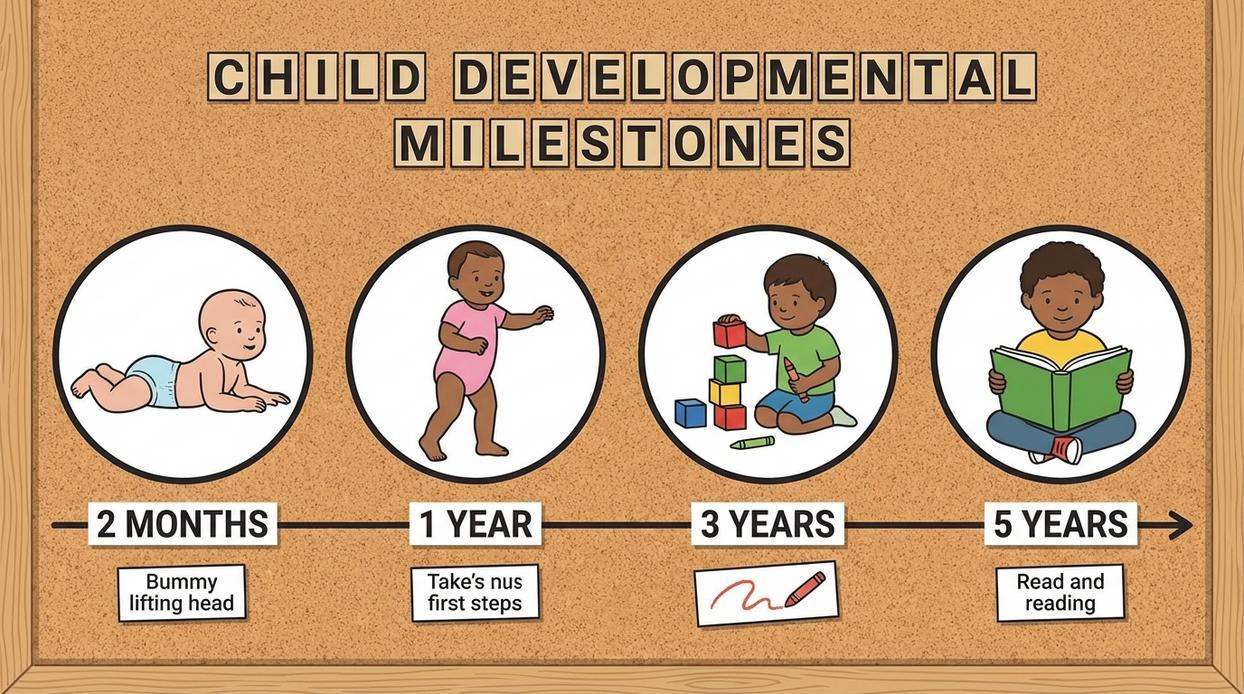
Between ages three and five, childhood starts to feel like a full‑blown adventure movie (with snack breaks). This stage of child development milestones by age is marked by confidence, curiosity, and a lot of “Why?”
Physical Milestones
Coordination improves dramatically. Many children can:
- Hop on one foot
- Catch a bounced ball
- Use scissors safely
- Draw basic shapes—or even a stick‑figure family portrait
They’re also gaining independence, dressing themselves and managing simple self‑care tasks (though shoes may still be on the wrong feet).
Cognitive Milestones
Curiosity leads the charge. “Why is the sky blue?” may be asked twelve times before breakfast. Preschoolers often count to ten, recognize some letters, and grasp simple time concepts like yesterday and tomorrow. They can follow multi‑step instructions such as, “Put your toys away and wash your hands.”
Some argue academics should wait until elementary school. That’s fair. However, research shows early playful learning supports later academic success (Harvard Center on the Developing Child). The key is balance—not flashcards at dawn.
Social & Emotional Milestones
Parallel play shifts into cooperative play. Children show empathy, follow simple rules, and want to please friends. They’re also better at naming feelings. If you’re wondering how to support emotional development in early childhood, this is a prime window.
Communication Milestones
Sentences grow clearer and longer. They can share simple stories, state their full name and age, and understand most of what they hear.
Speculation: As digital tools expand, future preschoolers may blend imaginative play with tech fluency earlier—but creativity will remain the true superpower.
Entering the World of School: Growing Logic and Friendships (6-8 Years)
As children step into elementary school, growth becomes more visible—and more practical. Physically, they refine coordination for sports, ride a bike without training wheels, tie shoelaces, and produce noticeably neater handwriting. These aren’t just cute wins; they signal stronger brain-body integration (and fewer morning shoe emergencies).
Meanwhile, cognitive leaps take center stage. This is when logical, organized thinking begins to bloom. Kids learn to read independently, grasp basic math concepts like addition and subtraction, and tell time. Importantly, they start understanding other perspectives—an early building block for empathy. When reviewing child development milestones by age, many guides stop at academics. However, what’s often missed is how travel, new environments, and routine shifts can accelerate flexible thinking.
Socially and emotionally, friendships matter deeply. Expect:
- A stronger sense of right and wrong
- Heightened awareness of their own feelings
- A growing desire for independence from family
In other words, they’re building both logic and loyalty—skills that last far beyond the playground.
Embracing Your Child’s Unique Timeline
You came here looking for reassurance and clarity about your child’s growth, and now you have a better understanding of how child development milestones by age serve as helpful guideposts—not rigid deadlines. It’s completely natural to worry when your child seems ahead or behind, but comparison often fuels unnecessary stress. What matters most is nurturing their individual path with patience and support.
If you still feel uncertain about your child’s progress, don’t carry that worry alone. Speak with your pediatrician, observe with confidence, and create a loving space that encourages exploration. Your calm, informed support is the greatest milestone of all.