
Traveling with children can feel overwhelming, especially when you’re trying to balance adventure with stability, learning, and emotional well-being. If you’re searching for practical ways to raise confident, adaptable kids while living a life on the move, this guide is designed for you. We break down travel-friendly parenting basics, child development strategies on the road, and realistic routines that help families thrive no matter the destination.
Beyond packing lists and flight hacks, we focus on nurturing emotional intelligence in children through new cultures, changing environments, and shared family experiences. Drawing on established child development research and real-world nomadic family practices, this article offers grounded, actionable insights you can apply immediately.
You’ll discover how to create consistency without rigidity, encourage curiosity without chaos, and turn travel into a powerful tool for growth. Whether you’re planning short trips or embracing long-term travel, this resource will help you parent with confidence wherever you are in the world.
The Compass Within
Every child needs steady guidance, but not rigid control. Think of feelings as weather systems: they roll in, shift, and pass. Our job is to name the storm and model shelter. When your child melts down at the airport or playground, pause and narrate what you see. This builds emotional intelligence in children through repetition and safety.
I will admit, no script works every time. Some days empathy lands; other days it flops (parenting keeps us humble). Still, consistent curiosity, open questions, and calm repair after conflict create resilience that travels anywhere. Even when outcomes surprise us.
Understanding the Core Building Blocks of Emotional Intelligence
By integrating practices that foster emotional intelligence into your family’s daily routine, as we explore in our article on Realistic Daily Parenting Schedules for Busy Families, you can help your children navigate their feelings more effectively from a young age.
When people talk about the “Big Five” of Social-Emotional Learning (SEL), they mean five core life skills:
- Self-Awareness – recognizing your own emotions and thoughts.
- Self-Management – regulating reactions (like calming down after a meltdown).
- Social Awareness – understanding others’ feelings and perspectives.
- Relationship Skills – communicating, cooperating, resolving conflict.
- Responsible Decision-Making – choosing actions that consider consequences.
In my opinion, these matter just as much as reading or math—maybe more. A child who can name their frustration when travel plans suddenly change is far better equipped than one who just shuts down. The same goes for making friends in a new city or respecting different cultural norms. These aren’t “soft” skills; they’re survival skills (especially outside your comfort zone).
Some argue kids naturally “pick this up.” I disagree. emotional intelligence in children develops best when adults model and practice it intentionally. Think of these five skills as the internal software running in the background. Without updates, glitches happen.
And this isn’t theory. It’s daily life—sharing toys, apologizing sincerely, adapting when the Wi-Fi fails (yes, even adults struggle). Master the basics early, and everything else runs smoother.
Cultivating Self-Awareness: The Art of “Feeling Your Feelings”
Helping kids identify emotions isn’t about raising tiny therapists. It’s about building emotional intelligence in children so they can understand what’s happening inside them (before it explodes outside them).
Here are three practical, travel-friendly strategies you can start today.
1. The Daily “Emotional Weather Report”
Pick a consistent moment—breakfast, bedtime, or even buckling into the car. Ask: What’s your emotional weather today?
- Sunny = happy or calm
- Cloudy = low energy or unsure
- Stormy = angry or overwhelmed
Weather analogies make abstract emotions concrete. A child might say, “I’m foggy,” which opens the door to gentle follow-ups: “What’s making it hard to see clearly today?”
Pro tip: Model it yourself. “I’m a little stormy because I didn’t sleep well.” Kids copy what we normalize.
2. Naming to Tame It
When emotions run high, resist minimizing. Instead of “You’re fine,” try:
“It looks like you’re feeling disappointed we have to leave the park.”
Labeling feelings activates the brain’s regulation centers (Lieberman et al., UCLA). In simple terms, words calm the nervous system. Once named, emotions feel manageable—not monstrous.
3. Rose, Bud, Thorn
At dinner or before bed, each person shares:
- Rose – the best part of the day
- Bud – something they’re excited about
- Thorn – a challenge
This builds vocabulary and perspective. A tough day isn’t all thorns.
As children grow, pair this with lessons on age appropriate responsibility teaching life skills gradually so reflection turns into action.
Small daily check-ins create lifelong self-awareness. And that’s a skill that travels anywhere.
Building Empathy and Social Skills in a World of Differences
Last year, at a crowded playground in Lisbon, my child froze when a group of kids ran past speaking rapid Portuguese. He squeezed my hand and whispered, “I don’t understand them.” Instead of rushing to fix it, I tried something simple.
Strategy 1: “Wonder Out Loud.” I said, “I wonder what games those children are playing?” A minute later: “That person is speaking a different language; I wonder what it’s like to know two languages.”
This technique models curiosity instead of judgment. Curiosity is the desire to learn about something new rather than fear it. When we “wonder out loud,” we show kids that differences are interesting, not intimidating. (And honestly, adults need this reminder too.)
Some parents argue that kids will “just figure it out.” Sometimes they do. But without guidance, children may default to avoidance. Gentle modeling builds emotional intelligence in children by helping them name and explore unfamiliar experiences.
Strategy 2: Perspective-Taking Through Stories. After watching a movie, ask, “How do you think that character felt when that happened?” Perspective-taking means imagining someone else’s thoughts or feelings. It’s like trying on someone else’s emotional shoes. We even practice while people-watching at cafés.
Strategy 3: Practice Makes Progress. Before entering a new play space, we role-play how to join a game or politely decline to share. Role-play is rehearsing social situations ahead of time. Pro tip: keep it playful so it doesn’t feel like a lecture.
Empathy isn’t automatic. It’s practiced, modeled, and lived—one small interaction at a time.
Fostering Resilience: Turning Setbacks into Strengths
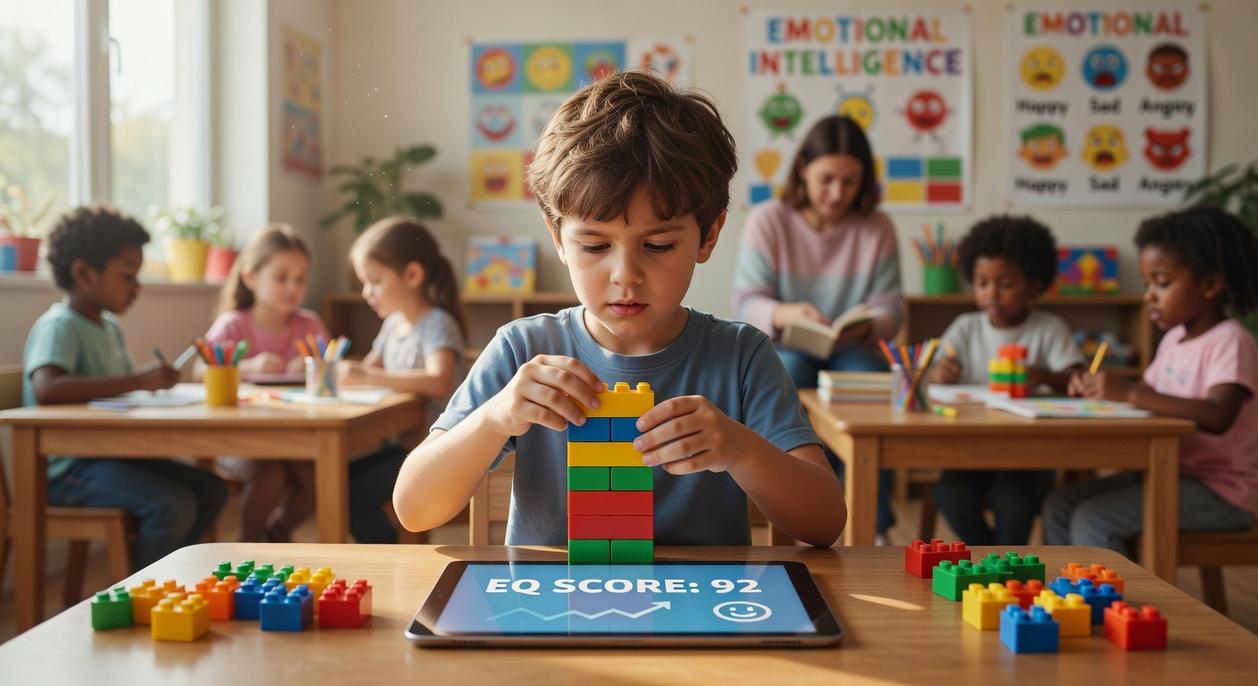
Travel rarely goes as planned; however, that’s the advantage. Call surprises “positive friction”—obstacles that strengthen problem-solving muscles. When a museum closes early, say, “Our first plan fizzled. Let’s invent Plan B.” By narrating flexible thinking, you teach adaptability in time, something most guides overlook.
Meanwhile, praise effort over outcomes. Research shows process-focused feedback boosts long-term grit (Dweck, 2006). Instead of “You won,” try “You kept trying different strategies.” That shift builds emotional intelligence in children and lasting confidence.
Some argue shielding kids prevents stress. Yet challenges, like puzzles or missed buses, create resilient travelers.
Your Action Plan for Raising an Emotionally Skilled Child
You don’t need grand speeches or Pinterest-worthy charts. You need small, steady reps. Think daily check-ins versus once-a-month heart-to-hearts.
Option A: React to meltdowns as disruptions.
Option B: Treat them as data (like a tiny emotional weather radar).
The second path builds emotional intelligence in children because it turns real life into practice.
Try the “Emotional Weather Report.” Ask: sunny, cloudy, or stormy? Short, portable, powerful.
Skeptics say kids “just grow out of it.” Research disagrees; consistent coaching strengthens regulation skills (Harvard Center on the Developing Child).
Connection follows daily consistency.
Raising Resilient, Connected Kids Wherever You Roam
Traveling with your family isn’t just about reaching new destinations — it’s about shaping adaptable, confident kids along the way. You came here looking for practical ways to balance adventure with structure, nurture growth on the road, and strengthen your bond as a family. Now you have the tools to create routines, encourage curiosity, and intentionally support emotional intelligence in children no matter where you are in the world.
The biggest challenge for nomadic families isn’t logistics — it’s wondering whether constant movement might disrupt stability or development. The truth is, with the right strategies, travel becomes the classroom. New cultures build empathy. Unexpected changes build resilience. Shared experiences build trust.
Now it’s time to put this into action. Start by choosing one routine to anchor your next trip — whether it’s nightly reflection time, a consistent learning ritual, or shared goal-setting before each destination. Small, intentional steps create lasting impact.
If you want proven, travel-tested parenting strategies that make life on the move smoother and more meaningful, explore more of our trusted guidance today. Thousands of traveling families rely on these insights to turn chaos into connection. Start building a stronger, more adaptable family journey now.
 Founder & Lead Travel Parenting Strategist
There is a specific skill involved in explaining something clearly — one that is completely separate from actually knowing the subject. Tyvian Kelthorne has both. They has spent years working with nomadic family routines in a hands-on capacity, and an equal amount of time figuring out how to translate that experience into writing that people with different backgrounds can actually absorb and use.
Tyvian tends to approach complex subjects — Nomadic Family Routines, Helpful Reads, Child Development Strategies being good examples — by starting with what the reader already knows, then building outward from there rather than dropping them in the deep end. It sounds like a small thing. In practice it makes a significant difference in whether someone finishes the article or abandons it halfway through. They is also good at knowing when to stop — a surprisingly underrated skill. Some writers bury useful information under so many caveats and qualifications that the point disappears. Tyvian knows where the point is and gets there without too many detours.
The practical effect of all this is that people who read Tyvian's work tend to come away actually capable of doing something with it. Not just vaguely informed — actually capable. For a writer working in nomadic family routines, that is probably the best possible outcome, and it's the standard Tyvian holds they's own work to.
Founder & Lead Travel Parenting Strategist
There is a specific skill involved in explaining something clearly — one that is completely separate from actually knowing the subject. Tyvian Kelthorne has both. They has spent years working with nomadic family routines in a hands-on capacity, and an equal amount of time figuring out how to translate that experience into writing that people with different backgrounds can actually absorb and use.
Tyvian tends to approach complex subjects — Nomadic Family Routines, Helpful Reads, Child Development Strategies being good examples — by starting with what the reader already knows, then building outward from there rather than dropping them in the deep end. It sounds like a small thing. In practice it makes a significant difference in whether someone finishes the article or abandons it halfway through. They is also good at knowing when to stop — a surprisingly underrated skill. Some writers bury useful information under so many caveats and qualifications that the point disappears. Tyvian knows where the point is and gets there without too many detours.
The practical effect of all this is that people who read Tyvian's work tend to come away actually capable of doing something with it. Not just vaguely informed — actually capable. For a writer working in nomadic family routines, that is probably the best possible outcome, and it's the standard Tyvian holds they's own work to.