Traveling with children sounds magical in theory—but in reality, it comes with big questions. How do you maintain routines on the road? What about education, social development, and stability? And is homeschooling while traveling actually sustainable long term? If you’re searching for practical answers, you’re in the right place.
This article is designed for parents who want more than inspiration—they want workable strategies. We’ll explore travel-friendly parenting basics, ways to support healthy child development while moving frequently, and how to build flexible routines that create consistency no matter the destination. You’ll also find practical, real-world tips that make day-to-day nomadic family life smoother and less stressful.
Our guidance draws on hands-on experience, established child development principles, and proven family travel strategies—not just theory. Whether you’re planning short-term trips or embracing a long-term nomadic lifestyle, you’ll leave with clear, actionable insights to help your family thrive on the road.
Building a Foundation: The Mindset and Benefits of a Nomadic Education
Let’s be honest: trying to recreate a rigid classroom at the kitchen table while the world waits outside is exhausting. The real shift happens when you stop thinking of travel as a distraction and start seeing it as the curriculum. Life as learning means everyday experiences become lessons (yes, even the missed train).
New environments challenge kids in ways worksheets can’t. Navigating a street market builds problem-solving skills. Hearing a new language sparks curiosity. Psychologists note that novel settings stimulate cognitive flexibility—the brain’s ability to adapt and think creatively (American Psychological Association). That’s a superpower in adulthood.
And cultural immersion? That’s geography, history, and social studies rolled into one living textbook. Visiting ancient ruins beats memorizing dates any day.
Many critics argue homeschooling while traveling lacks structure. Fair point. But structure doesn’t have to mean stagnation. It can mean routines anchored by exploration (pro tip: keep mornings consistent).
Most of all, shared challenges forge tight family bonds. You’re not just studying the world—you’re navigating it together. For more ideas, explore nomadic education.
The Rhythm of the Road: Creating Structure and Routine While Traveling
Travel sounds free and wild (and sometimes it is), but kids thrive on rhythm. That’s where Anchor Points come in—non-negotiable routines that stay the same no matter the zip code.
The “Anchor Points” Method
Choose 2–3 daily constants:
- Morning math or journaling (20 minutes)
- Reading before bed
- Sunday family planning chat
These predictable rituals act like emotional seatbelts. Even if you’re parked near the Grand Canyon one week and a Florida beach the next, your child knows what to expect.
Some argue routines limit spontaneity. Fair. But structure actually creates freedom. When kids know learning time ends at 11 a.m., they relax and enjoy the afternoon hike (no negotiations required).
Balancing Learning and Discovery
Here’s a simple weekly rhythm:
| Time | Monday–Thursday | Friday |
|—————|——————————|——————-|
| 8:30–10:30 am | Core lessons | Light review |
| 10:30–12 pm | Local exploration/“field trip” | Museum or park |
| Afternoon | Free play / travel time | Family reset |
This works especially well for homeschooling while traveling, where flexibility matters but drift is dangerous.
Travel-Friendly Parenting Basics
- Screens: Set clear windows (e.g., travel days only).
- Sleep: Keep the same bedtime routine, even in RVs.
- Personal space: Give each child a small bin or drawer—ownership reduces friction.
Pro tip: Use white noise in shared spaces; it preserves sleep across thin RV walls.
The “One-Bag” Schoolhouse
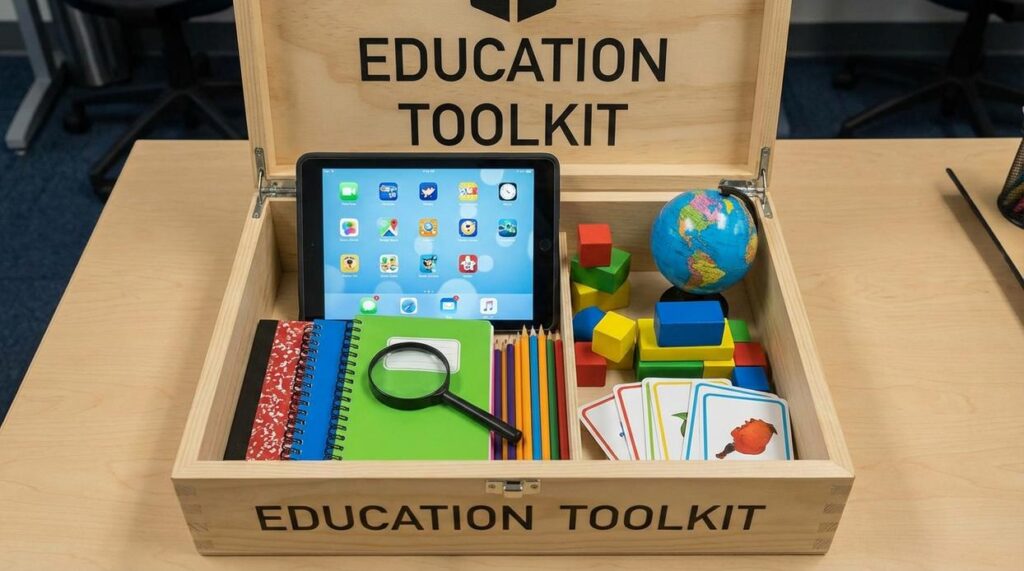
Pack multi-use tools: lined notebook, tablet, pencils, dice, deck of cards, and a slim read-aloud. That’s it. Learning doesn’t require a classroom—just intention.
For deeper guidance on routines, see managing work and parenting in a traveling family lifestyle.
Curriculum and Tools: Your Educational Toolkit for Any Location
Travel doesn’t pause education—it transforms it. The key is choosing an approach that fits your family rhythm.
Worldschooling treats the world as the classroom. Kids learn history in Rome, marine biology in Thailand, and currency math at a local market. Unschooling is child-led learning, where curiosity drives the curriculum (yes, even if that curiosity starts with street food). Eclectic homeschooling blends structure with flexibility—think math workbooks in the morning, museum visits in the afternoon.
If you’re homeschooling while traveling, clarity beats perfection. Pick a philosophy, then adapt as needed.
Essential Digital Resources
Keep tools lightweight and offline-friendly:
- Khan Academy for structured math and science
- Libby or Hoopla for downloadable ebooks and audiobooks
- Google Docs for writing and journaling offline
- Duolingo for practicing the local language
- National Geographic Kids for geography and science articles
Pro tip: Download everything before crossing borders (airport Wi‑Fi is not your friend).
Location-Based Learning Projects
Turn destinations into unit studies in three steps:
- Identify the theme (e.g., geology at a national park).
- Add cross-subject layers—biology (ecosystems), math (trail distances), conservation policy.
- End with a creative project like a mini documentary or illustrated field guide.
A city subway map becomes a lesson in engineering and urban planning. A beach day? Physics of waves and environmental science.
Documenting the Journey
Have kids track learning through:
- Travel journals
- Private family blogs
- Short video diaries
- Digital scrapbooks
These records double as portfolios (and future nostalgia fuel).
Navigating Challenges and Nurturing Development on the Move
Traveling full-time with kids sounds dreamy—until someone’s crying over fractions in a camper van. Let’s tackle the big concerns with honesty (and a little humor).
Addressing the Socialization Question
Kids don’t need a single zip code to build friendships. They need consistency and opportunity. Try:
- Local activity drop-ins (sports, art classes, library events)
- Virtual clubs or book groups
- Reconnecting with familiar families along repeat routes
Yes, goodbyes are tough—but so is middle school lunch. Learning to connect quickly builds social confidence.
Managing Learning Gaps
With homeschooling while traveling, gaps can happen. The fix? Short weekly skill check-ins for math and language arts. Use diagnostic tools and adjust. Travel becomes the field trip, not the distraction.
Child Development on the Road
Navigation, budgeting, trip planning—these foster independence and resilience (and better map-reading than most adults).
Parental Burnout
Schedule “no-learning” days. Rest is productive. Even superheroes take off their capes sometimes.
Keep Your Family Learning and Thriving on the Road
You set out looking for real, practical ways to balance travel with your child’s growth and education—and now you have a clear path forward. From building flexible routines to supporting development on the go, you’ve seen how structure and adventure can work together instead of against each other.
The biggest challenge for traveling families isn’t the miles—it’s the fear of falling behind, losing consistency, or feeling overwhelmed trying to do it all. With the right systems in place, homeschooling while traveling becomes not just manageable, but deeply rewarding.
Now it’s time to take action. Start by creating a simple weekly rhythm, choose portable learning tools that fit your travel style, and commit to small, consistent learning moments each day.
If you’re ready to make travel and education work seamlessly together, explore our proven guides trusted by thousands of nomadic families. Get the step-by-step support you need today and turn your next trip into your child’s most powerful learning experience yet.